In the world of rack-mounted IT infrastructure, size matters — and few formats are as strategically versatile as the 4u cabinet. Whether you are building a compact server room, equipping a branch office, setting up an edge computing node, or deploying a high-density network distribution point, the 4u cabinet occupies a uniquely capable position in the rack form factor spectrum. It is large enough to house meaningful combinations of servers, switches, patch panels, and power distribution units, yet compact enough to fit in constrained physical environments where a full 42U floor-standing rack would be impractical.
This guide covers everything IT professionals, procurement managers, and network engineers need to know about the 4u cabinet: what it is, where it excels, how to evaluate structural quality, what thermal and cable management capabilities to look for, and how the LNH Series delivers on all of these dimensions at an engineering level that sets a new standard for professional rack infrastructure.
- Understanding the 4U Cabinet: Definition and Context
A 4u cabinet is a rack enclosure with an internal equipment-mounting height of four rack units. One rack unit — abbreviated as 1U — equals 44.45 mm (approximately 1.75 inches) in height. A 4u cabinet therefore provides approximately 177.8 mm (just over 7 inches) of usable vertical mounting space inside the enclosure.
Within the standard rack unit scale, a 4u cabinet sits at the compact end. The most common rack sizes range from 2U desktop units to 47U or 48U tall floor-standing cabinets. A 4u cabinet is typically chosen for dedicated small-appliance installations — a 4U server, a combination of two 2U appliances, a 1U switch with a 1U firewall and two 1U patch panels, or any mix of equipment that totals four rack units. Understanding this constraint from the outset is critical to planning an effective 4u cabinet deployment.
Despite its modest height, a well-engineered 4u cabinet is not a compromise product. When built with the same materials, locking mechanisms, ventilation systems, and cable management infrastructure as larger professional rack enclosures, a 4u cabinet can deliver full enterprise-grade protection and organization for the equipment it houses.
- Where a 4U Cabinet Is Most Commonly Deployed
The 4u cabinet is not a one-size-fits-all solution, but it is ideally suited to a specific set of deployment scenarios that appear frequently across virtually every industry vertical.
Edge Computing Nodes
As computing workloads migrate closer to the point of data generation, edge locations require compact but capable enclosures. A 4u cabinet is often the right size for an edge node that houses a single ruggedized server, a managed switch, and a small UPS — providing the protection and organization of a professional rack enclosure without occupying excessive space in a remote location such as a telecommunications room, retail stockroom, or industrial control area.
Branch Office and Remote Site Infrastructure
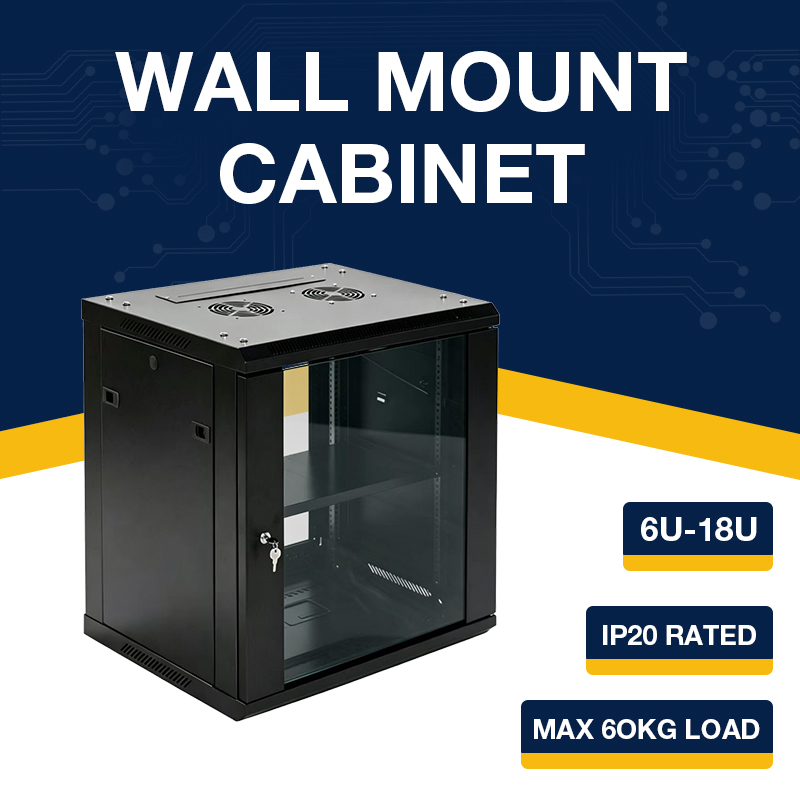
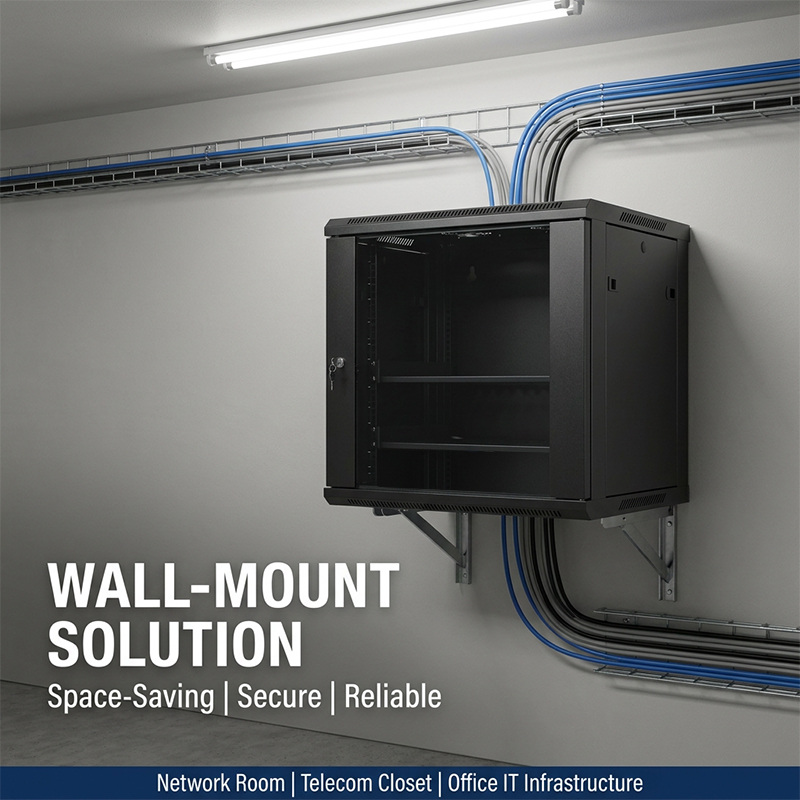
In branch offices, the IT footprint is typically small but still requires organized, secure, and properly ventilated housing. A 4u cabinet provides the structured environment that branch office equipment demands — locking doors, proper airflow, grounded steel construction — in a package that fits neatly in a wiring closet, under a desk, or on a dedicated wall-mounted bracket. The 4u cabinet prevents the improvised cable tangles and unsecured equipment arrangements that frequently develop when small locations lack proper rack infrastructure.
Dedicated Single-Appliance Enclosures
Some organizations deploy a 4u cabinet specifically to house a single large appliance — a 4U storage array, a 4U rack-mounted UPS, a 4U video recording server, or a 4U network security appliance. In these cases, the 4u cabinet acts as a purpose-built protective enclosure, providing structural support, ventilation, and physical security for that one critical piece of hardware.
AV and Broadcast Control Environments
Audio-visual integration and broadcast control rooms frequently use 4u cabinet enclosures to organize small clusters of rack-mount processing equipment: video encoders, audio interfaces, signal converters, and control processors. These environments often prioritize both functionality and aesthetics, making the clean finish and lockable panel design of a quality 4u cabinet particularly appropriate.
Industrial and Manufacturing Applications
Industrial environments increasingly rely on rack-mounted computing for process control, SCADA systems, and factory floor networking. A 4u cabinet used in these settings must combine the structural rigidity needed to withstand vibration, the protection necessary to prevent dust and debris ingress, and the accessibility required for rapid maintenance by operations staff.
- Structural Engineering: What Separates a Quality 4U Cabinet from a Generic Enclosure
Not every 4u cabinet on the market is engineered to the same standard. The structural integrity of an enclosure directly affects its long-term reliability, the safety of the equipment inside, and the ease of installation and maintenance over years of service.
Frame Rigidity Through Plate-Curving Technique
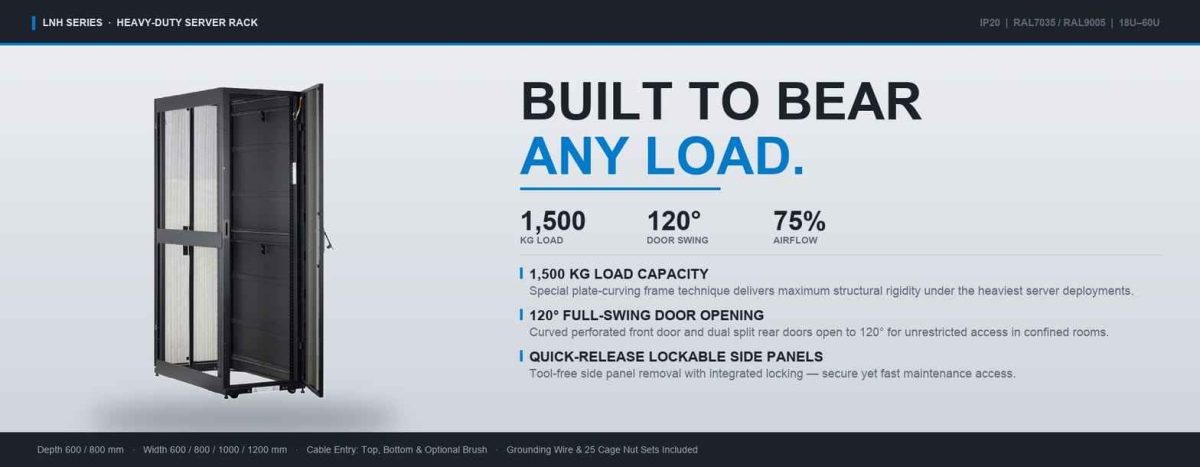
The LNH Series delivers exceptional frame rigidity through a specialized plate-curving manufacturing technique. Rather than constructing the 4u cabinet frame from flat steel sheets joined at corners, the structural components are precision-bent to create integrated box-beam cross-sections. This technique substantially increases the frame’s resistance to bending, twisting, and racking forces compared to conventional flat-panel construction methods used in lower-cost 4u cabinet alternatives.
The practical result of this engineering approach is a 4u cabinet that maintains its dimensional accuracy over time. Doors continue to close correctly, panel-mount hardware remains secure, and 19-inch profile rails stay true — even after years of repeated equipment swaps and maintenance access cycles. A frame that distorts under load or vibration is one of the most common failure modes in budget 4u cabinet products.
Load Capacity: Engineered for Dense Hardware
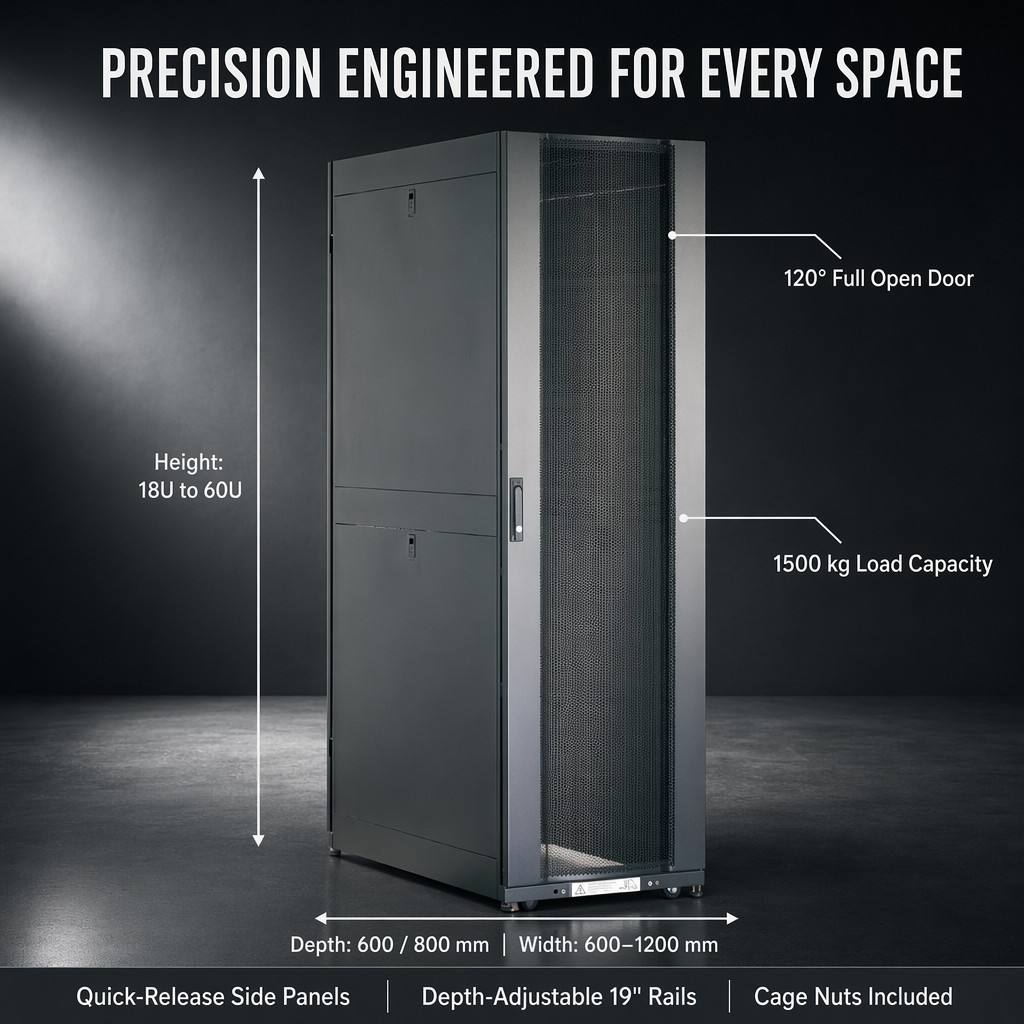
One of the most important structural specifications for a 4u cabinet is its rated static load capacity. The LNH Series is engineered to support up to 1,500 kg of equipment weight. While a 4u cabinet will rarely approach this limit given the relatively small number of devices it houses, this rating is a proxy for the overall structural quality of the enclosure. A 4u cabinet rated to 1,500 kg uses heavier-gauge steel, more robust welding or fastening, and higher-quality mounting hardware than an enclosure rated to 200–300 kg.
For a 4u cabinet housing a dense storage server, UPS, or other high-weight appliance, confirming that the enclosure’s rated load exceeds the actual equipment weight by a comfortable margin — ideally 50% or more — is an essential pre-purchase step. Always include the weight of cable managers, PDUs, and accessories in the calculation.
IP20 Safety Rating
The LNH Series 4u cabinet carries an IP20 safety class rating. IP20 protection guards against solid objects larger than 12 mm — including accidental finger contact with live components inside the enclosure. For a 4u cabinet installed in a standard indoor IT environment, IP20 is the appropriate protection level. The rating ensures that electrical safety standards are met while maintaining the ventilation openings needed for effective thermal management.
- Door System Design in a Professional 4U Cabinet
The door system of a 4u cabinet determines how effectively the enclosure protects its contents, how convenient access is for authorized technicians, and how well the enclosure manages airflow. A well-designed door system is one of the most visible differentiators between a professional-grade 4u cabinet and an entry-level product.
Curved Perforated Front Door with Swing Handle Lock
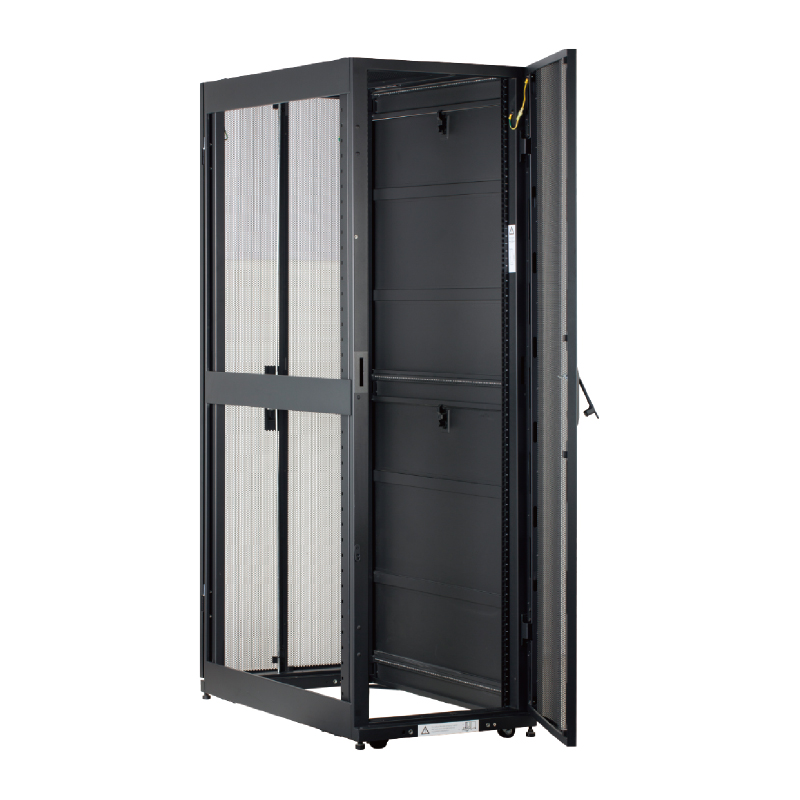
The LNH Series 4u cabinet features a curved perforated front door with a swing handle locking mechanism. The curved aerodynamic profile is not decorative — it increases torsional stiffness along the door’s vertical axis, preventing the warping that can occur in flat doors over repeated thermal cycles and access events. For a 4u cabinet, door rigidity is especially important because a warped door on a compact enclosure is difficult and costly to correct after installation.
The perforations in the front door allow warm air expelled from equipment heat sinks to exit the 4u cabinet frontally while cooler ambient air is drawn in from the rear. The swing handle lock provides positive latching feedback — technicians can confirm the 4u cabinet door is fully secured without a separate visual inspection, which matters in environments where the enclosure is installed overhead or in a confined space.
Double Flat Perforated Split Rear Doors
The rear of the LNH Series 4u cabinet uses double flat perforated split rear doors, each secured independently by swing handle locks. The two-panel split design is particularly practical for a 4u cabinet installed in tight locations. A single wide rear door requires a clear swing arc of the full cabinet width — in many wiring closets and server rooms, this clearance is simply not available. Split rear doors each require only half the swing arc, giving technicians usable rear access to the 4u cabinet even in constrained environments.
The perforation on the rear doors of the 4u cabinet contributes to the 75% total airflow rate across the enclosure — a figure that significantly exceeds what budget-tier products typically achieve. With perforated front and rear doors, natural convection cooling operates effectively inside the 4u cabinet without requiring additional active cooling devices in many standard deployment scenarios.
120° Door Opening Angle
Both the front and rear doors of this 4u cabinet open to a full 120° angle. For a 4u cabinet that may be mounted at an elevated position — on a wall, on a shelf, or in an overhead rack position — a 120° opening angle is essential. Narrow door openings on a compact 4u cabinet make it unnecessarily difficult to route cables, install equipment, or inspect connections. The 120° angle eliminates this constraint entirely.
Reversible Door Stop: Left or Right Opening
The door stop on the LNH Series 4u cabinet is easily reversible, allowing the door swing direction to be changed from left-hinge to right-hinge without special tools. This flexibility is especially valuable for a 4u cabinet, which is more likely than a floor-standing rack to be installed in a position where wall proximity or adjacent equipment constrains door swing direction. Being able to reverse the door at installation time — rather than ordering a specific handing configuration in advance — simplifies procurement and reduces installation delays.
- Side Panel Access and Security in a 4U Cabinet
The side panels of a 4u cabinet close the enclosure laterally, providing physical security, dust protection, and structural contribution to the overall frame rigidity. The design of these panels directly affects how convenient maintenance access is during the operational life of the enclosure.
The LNH Series 4u cabinet uses quick-release lockable side panels. The quick-release mechanism allows a trained technician to remove a side panel in seconds without tools — a significant time-saver during cable pulling, equipment changes, or physical inspections. The locking function ensures side panels cannot be removed by unauthorized personnel, maintaining the physical security posture of the 4u cabinet between authorized maintenance events.
The locking side panel design also distributes maintenance wear more evenly than panels secured with conventional screws. Repeatedly torquing and releasing screws in a 4u cabinet side panel over years of maintenance gradually strips threads and weakens the panel-to-frame interface. A quick-release system avoids this cumulative degradation entirely.
- Ventilation and Thermal Management in a 4U Cabinet
Thermal management is a critical consideration for any rack enclosure, but it carries particular weight for a 4u cabinet because the enclosure’s compact volume concentrates heat more rapidly than larger formats. A 4u cabinet that traps heat will shorten component lifespans and trigger thermal throttling that degrades the performance of servers, storage controllers, and network appliances.
75% Front and Rear Door Perforation Rate
The LNH Series 4u cabinet achieves a 75% airflow rate through its perforated front and rear doors. This means three-quarters of each door’s surface area is open to air passage, minimizing resistance to airflow in both the intake and exhaust paths. For a 4u cabinet housing a single high-power server or storage array, this perforation rate allows natural convection to handle thermal loads effectively in many environments — reducing or eliminating the need for supplemental external cooling.
When evaluating any 4u cabinet, request the manufacturer’s perforation rate specification. Many lower-cost products achieve only 40–55% perforation, which meaningfully increases thermal resistance and can raise the internal temperature of the 4u cabinet by several degrees Celsius under typical operating loads. This temperature difference directly impacts component longevity.
Top and Bottom Cable Entry with Cellular Covers
The LNH Series 4u cabinet includes large cable entry openings at both the top and bottom of the enclosure, fitted with black cellular panel covers. These covers allow cables to pass through while minimizing the uncontrolled air bypass that open cable entries would create. In a compact 4u cabinet where the internal airflow volume is limited, preventing air bypass through cable entries maintains the effectiveness of the front-to-rear convection path.
Optional Brush Cable Entry at Any Location
For installations where cables need to enter the 4u cabinet at mid-height positions — or where the top and bottom entries are not optimally positioned relative to cable routing paths — the LNH Series supports optional brush cable entry panels at virtually any position on the enclosure body. Brush panels provide a flexible, air-sealing cable passage that accommodates varying cable diameters and bundle sizes without creating airflow gaps inside the 4u cabinet.
- 19-Inch Profile Rails and Equipment Mounting in a 4U Cabinet
The 19-inch rack standard is the universal equipment format for servers, switches, storage arrays, UPS units, patch panels, and the vast majority of professional IT hardware. Any professional-grade 4u cabinet must be designed around this standard with precision-machined rails, accurate U-position marking, and sufficient depth to accommodate the deepest equipment in the installation.
Front and Rear Rail Mounting
The LNH Series 4u cabinet installs 19-inch profile rails at both the front and rear of the enclosure. Front-and-rear rail support is essential for any equipment weighing more than a few kilograms. A 4u cabinet that provides only front-rail mounting forces equipment to cantilevered from the front of the enclosure, creating stress concentrations at the rack-mount ears that can damage both the equipment and the rails over time. Dual-rail support in this 4u cabinet distributes load evenly along the equipment chassis.
Depth-Adjustable Rails
The profile rails in the LNH Series 4u cabinet are adjustable in depth, allowing the front-to-rear rail spacing to be modified to suit equipment of varying depths. This is particularly valuable in a 4u cabinet because the compact format often leads to mixed installations — a shallow 1U patch panel alongside a 3U deep server, for example. Depth-adjustable rails allow each item to be positioned optimally within the 4u cabinet without compromise.
U-Position Markings on All Rails
Every profile rail in this 4u cabinet includes clear unit (U) position markings. While four rack units may seem like a small space to document, U markings remain important for accurate installation planning, equipment layout documentation, and troubleshooting. In a 4u cabinet installed at height — as wall-mounted enclosures often are — being able to visually confirm U positions without removing equipment saves meaningful time during maintenance.
25 Sets of Cage Nuts Included
The LNH Series 4u cabinet ships with 25 sets of cage nuts as standard inclusions. Cage nuts are the threaded fasteners that engage with the profile rail slots to secure equipment mounting screws. Including them as standard eliminates the common procurement frustration of discovering that a new 4u cabinet requires a separate cage nut order before installation can proceed. The included quantity is more than sufficient for a fully populated 4u cabinet.
- Cable Management in a 4U Cabinet
Effective cable management in a 4u cabinet is challenging precisely because the space is limited. Every cable routed inside a compact 4u cabinet must be organized with care — there is little room to hide poor cabling practice, and disorganized cables in a 4u cabinet obstruct airflow, complicate troubleshooting, and increase the risk of accidental disconnection during maintenance.
Horizontal and Vertical Cable Management Options
The LNH Series 4u cabinet supports both horizontal and vertical cable management channel accessories. Horizontal cable managers are mounted between rack units and route patch cords and power cables laterally to the sides of the 4u cabinet, keeping the front face of equipment visible and accessible. Vertical cable managers run the full height of the enclosure along the side rails, providing organized paths for backbone cabling, fiber runs, and power distribution cables.
800 mm Wide Models Include 2 Vertical Cable Managers as Standard
For the 800 mm wide configuration of this 4u cabinet, two vertical cable managers are included as standard equipment — one positioned on each side of the 19-inch rails. This inclusion represents genuine value: vertical cable managers are often purchased as afterthoughts following installation, resulting in additional cost, project delay, and a period of disorganized cabling while the accessories are in transit. Having them included with the 4u cabinet means cable management can begin on day one of installation.
- Dimension Options: Choosing the Right 4U Cabinet Size
While the U-height of a 4u cabinet is fixed at four units, the other dimensions — depth and width — vary between product configurations and must be matched carefully to both the equipment being installed and the physical space available.
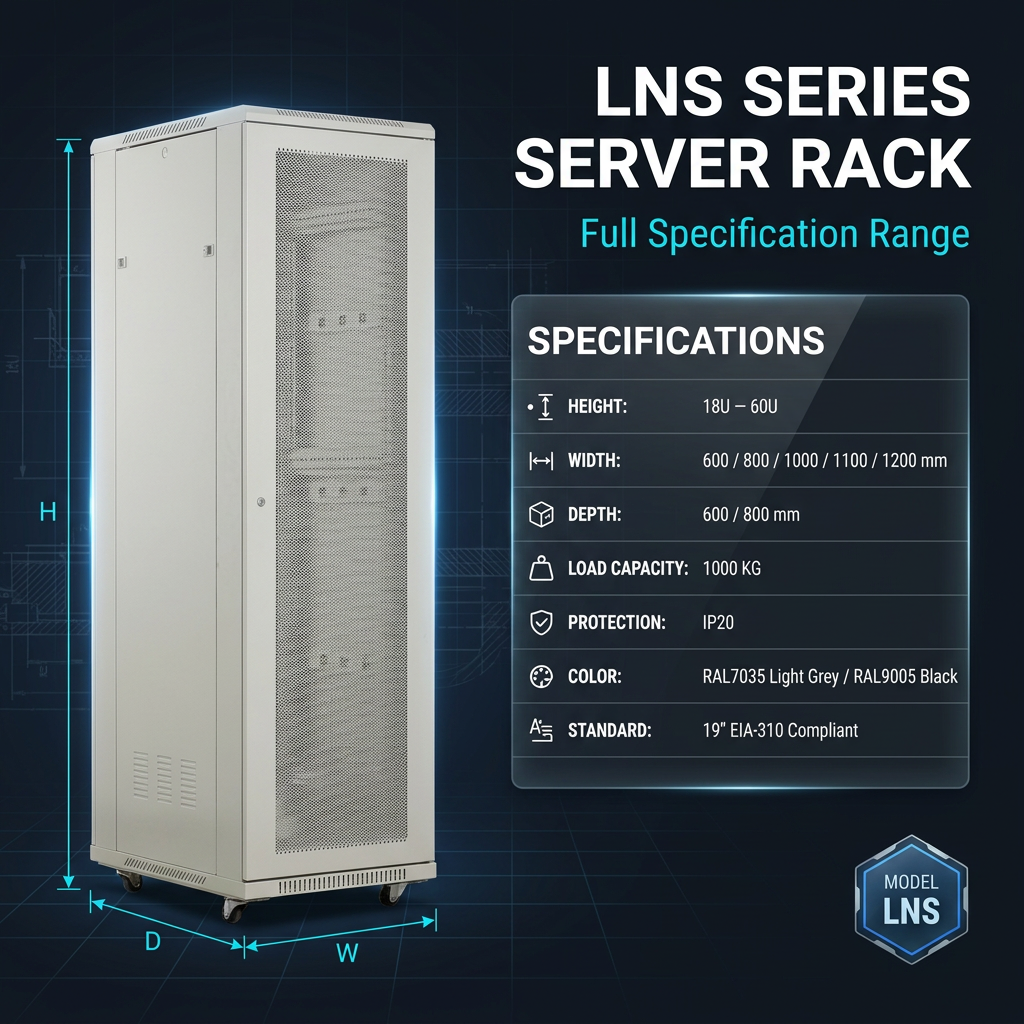
Depth: 600 mm or 800 mm
The depth of a 4u cabinet determines the maximum equipment depth it can accommodate, as well as how much room remains behind equipment for cable management and airflow. A 600 mm deep 4u cabinet is appropriate for switches, patch panels, and shallow appliances. An 800 mm deep 4u cabinet is recommended whenever the installation includes servers or storage arrays with depths of 650 mm or greater, or whenever cable management behind the equipment is a priority.
The LNH Series is available in both 600 mm and 800 mm depth configurations, giving procurement teams the flexibility to specify the appropriate 4u cabinet depth for each deployment scenario rather than compromising with a single depth across all installations.
Width: 600 mm, 800 mm, 1000 mm, and 1200 mm
Width options for the LNH Series 4u cabinet span four standard sizes: 600 mm, 800 mm, 1000 mm, and 1200 mm. All four widths accommodate standard 19-inch rack equipment in the center of the enclosure. The additional width beyond 600 mm provides side space for vertical cable management, supplemental PDUs, environmental monitoring equipment, and other accessories.
- 600 mm wide 4u cabinet: minimal footprint, ideal for space-constrained wiring closets and wall-mount installations
- 800 mm wide 4u cabinet: most popular configuration; includes 2 vertical cable managers as standard, balances space and functionality
- 1000 mm wide 4u cabinet: additional side space for larger cable bundles, supplemental accessories, or dual-PDU configurations
- 1200 mm wide 4u cabinet: maximum width option, used when high-density cabling or multiple supplemental components must coexist alongside 19-inch equipment
- Color and Finish Options for a 4U Cabinet
The finish of a 4u cabinet matters in environments where the enclosure is visible — open-plan offices, reception areas, broadcast studios, and customer-facing technical spaces. The LNH Series 4u cabinet is available in two professional finishes: RAL7035 light grey and RAL9005 black.
RAL7035 light grey is the standard finish for most data center and server room applications. The neutral grey makes equipment labels, cable tags, and dust accumulation easier to spot, supporting cleaner maintenance practices. RAL9005 black is the preferred finish for environments where a modern or premium aesthetic is important — broadcast control rooms, executive suites, creative industry workspaces, and high-visibility AV installations where the 4u cabinet is part of the room’s visual environment.
- Mobility and Staging for a 4U Cabinet
While a 4u cabinet is most often deployed in a fixed, wall-mounted or shelf-mounted position, there are important use cases where mobility adds significant operational value — particularly during pre-deployment staging, equipment testing, and facility relocations.
The LNH Series 4u cabinet includes heavy-duty castors and adjustable leveling feet as standard equipment. The castors allow the fully assembled and loaded 4u cabinet to be rolled from a staging area to its permanent installation position without unloading equipment. Once positioned, the leveling feet stabilize the 4u cabinet on uneven floor surfaces and provide the plumb, level reference needed before final wall or shelf mounting.
For organizations that stage equipment in a central facility before shipping to remote locations, the ability to fully assemble and test a 4u cabinet off-site — then transport it as a complete, ready-to-mount unit — reduces on-site installation time significantly. This is particularly valuable for multi-site rollouts where dozens of 4u cabinet units must be deployed efficiently across geographically distributed locations.
- Grounding, Safety Compliance, and Electrical Protection in a 4U Cabinet
Electrical safety in a 4u cabinet is governed by the same standards that apply to larger rack enclosures — and compliance is non-negotiable in professional IT and industrial environments. Ungrounded rack infrastructure creates shock hazards and can amplify electromagnetic interference that degrades the performance of sensitive networking and server equipment.
Grounding Wire Included as Standard
The LNH Series 4u cabinet ships with a grounding wire included in the package. This wire bonds the cabinet frame to the building’s electrical ground, providing a low-impedance fault current path that protects both personnel and equipment. Without a verified ground connection, a 4u cabinet housing equipment with a wiring fault becomes an electrocution hazard. The included grounding wire ensures that proper grounding is implemented from day one of installation.
Safety and Warning Labels Pre-Applied
Warning and compliance stickers are pre-applied to the front and rear bottom frame of this 4u cabinet. These labels communicate critical safety information — maximum load warnings, electrical hazard notices, and installation instructions — directly on the enclosure where technicians will encounter them during installation and maintenance. Pre-applied labels also support compliance documentation requirements in regulated industries where equipment labeling is part of the installation audit trail.
- Smart-Ready Capabilities: Upgrading a 4U Cabinet for Intelligent Infrastructure
The rapid advancement of smart rack technology is making remote monitoring, access control, and power management accessible even for compact enclosures. The LNH Series 4u cabinet is designed to support smart upgrades, making it compatible with the growing ecosystem of intelligent rack accessories.
Smart-ready integrations available for this 4u cabinet include:
- Smart PDU integration: remote outlet-level power monitoring, switching, and consumption analytics within the 4u cabinet
- Smart lock systems: electronic access control with audit logging for the 4u cabinet doors, enabling remote authorization and tamper alerting
- Front door LED screen: real-time display of temperature, humidity, power consumption, and system status directly on the face of the 4u cabinet
For a 4u cabinet deployed at an edge location or remote branch office, smart-ready capabilities deliver the most operational impact. When a remote technician can power-cycle a failed appliance inside the 4u cabinet, verify that the door is closed and locked, and confirm that internal temperatures are within safe operating ranges — all without dispatching an on-site engineer — the cost savings per incident are substantial.
The smart-ready architecture of the LNH Series 4u cabinet aligns with the broader industry movement toward DCIM (Data Center Infrastructure Management) integration at every tier of the infrastructure hierarchy — from hyperscale data centers to the smallest edge 4u cabinet deployment at a remote site.
- Packaging Options: Flat Pack and Assembled Delivery for a 4U Cabinet
Packaging and logistics are practical considerations that affect both procurement cost and installation efficiency. The LNH Series 4u cabinet is available in two packaging formats: flat packing and assembly packing with a pallet.
Flat-packed 4u cabinet units ship disassembled, significantly reducing the volume and weight of each shipment. For importers and distributors managing large-scale deployments, flat pack shipping allows more 4u cabinet units per container, reducing per-unit freight cost. Assembly-packed units ship as complete, pre-assembled enclosures on a pallet — ready for immediate installation upon delivery, with no assembly labor required on site.
For organizations deploying a single 4u cabinet or a small number of units, the assembly-packed option simplifies installation logistics. For large multi-site rollouts, flat packing delivers meaningful cost savings at scale that compound across hundreds of 4u cabinet units.
- How to Evaluate and Select the Right 4U Cabinet for Your Project
With a clear understanding of the specifications that define a quality 4u cabinet, the selection process becomes methodical. The following checklist covers the key evaluation criteria:
- Confirm your equipment list fits within 4U: list all planned rack-mount devices with their U heights and verify the total does not exceed four units in the 4u cabinet.
- Measure equipment depth: select a 4u cabinet depth — 600 mm or 800 mm — that accommodates your deepest item with clearance for rear cable management.
- Calculate total equipment weight: verify the 4u cabinet’s rated load capacity exceeds your total equipment weight by a healthy margin.
- Assess thermal requirements: confirm the 4u cabinet’s perforation rate is sufficient for your equipment’s heat output; determine whether active cooling fans will be needed.
- Evaluate physical access constraints: consider door swing direction (reversible stop is a significant advantage), rear door clearance, and the 120° opening angle requirement.
- Plan cable management: specify horizontal and vertical cable managers appropriate to the 4u cabinet width and cable density of the installation.
- Assess security requirements: determine whether key locks, electronic access control, or smart lock integration is required for the 4u cabinet.
- Confirm smart-readiness: if remote monitoring, power management, or access control is required, verify that the 4u cabinet is compatible with smart PDU, smart lock, and LED display accessories.
- Select finish: match the 4u cabinet color — RAL7035 light grey or RAL9005 black — to the environment’s requirements.
- Choose packaging format: select flat-pack or assembled shipping based on logistics requirements and on-site labor availability.
- Common Installation Mistakes When Deploying a 4U Cabinet
Even after selecting the right 4u cabinet, installation errors can undermine performance, safety, and long-term reliability. The following mistakes are the most frequently observed in field deployments.
Overloading the 4U Cabinet’s Equipment Capacity
A 4u cabinet has a fixed U-height of four units. Attempting to install more than four rack units of equipment by stacking items on top of each other, removing blanking panels and cramming equipment into irregular positions, or mounting accessories outside the rail profile defeats the purpose of the enclosure and can create structural and thermal hazards. Respect the four-unit limit of the 4u cabinet and plan a second enclosure if additional capacity is needed.
Neglecting Rear Access Clearance
A 4u cabinet installed in a wiring closet or narrow technical space must retain enough clearance behind the rear doors for them to open fully. The 120° opening angle of the LNH Series rear doors requires approximately 500–600 mm of clearance from the rear edge of the 4u cabinet to the nearest obstruction. Failing to confirm this clearance before installation results in permanent maintenance access limitations.
Skipping Grounding
Electrical grounding is a safety requirement, not an optional refinement. Every 4u cabinet installation must include a verified connection between the enclosure frame and the building’s electrical ground. The grounding wire included with the LNH Series 4u cabinet should be the first accessory connected during installation — before any equipment is mounted. Skipping grounding creates a safety code violation and a genuine electrocution risk.
Ignoring Blanking Panels
A 4u cabinet with unused rack units should always have those positions filled with blanking panels. Blanking panels prevent short-circuit airflow — where hot exhaust air recirculates from the front face of equipment directly back into the intake of the same or adjacent equipment without passing through the heat exchangers. Even in a 4u cabinet with only two units of equipment installed, the two remaining empty positions should be blanked to maintain correct airflow direction.
Conclusion
The 4u cabinet occupies a strategically important position in the rack infrastructure ecosystem. Compact enough for branch offices, edge nodes, and space-constrained technical spaces, yet capable enough to house meaningful computing and networking hardware in a professional, secure, and well-ventilated enclosure — the 4u cabinet is a category worth understanding thoroughly before making a procurement decision.
The LNH Series demonstrates what engineering excellence looks like across every specification that matters for a 4u cabinet: frame rigidity through plate-curving technology, a 1,500 kg load rating, 75% front-and-rear door perforation for maximum airflow, depth-adjustable 19-inch profile rails with U-position markings, quick-release lockable side panels, integrated cable management options, smart-ready compatibility, and a broad selection of depth, width, and color configurations.
Whether you are specifying a single 4u cabinet for a branch office or managing a fleet of 4u cabinet deployments across a distributed enterprise network, the principles are the same: prioritize structural integrity, thermal performance, cable organization, and security. Choose a 4u cabinet that is built to the same standard as the equipment it protects.
If you are ready to discuss your 4u cabinet requirements, the LNH Series offers the specifications, flexibility, and build quality that demanding IT environments require. Contact us to explore the right 4u cabinet configuration for your specific application.