In today’s rapidly evolving IT landscape, the choice of a 42U cabinet can make or break the operational efficiency of your data center, server room, or enterprise network infrastructure. Whether you are a seasoned IT manager overseeing a multi-rack colocation facility or a business owner setting up your first dedicated server room, understanding what to look for in a 42U cabinet is essential to ensuring long-term reliability, scalability, and performance.
The 42U cabinet is the most widely adopted server rack size in the global IT industry. Its standardized height accommodates the widest variety of equipment — from blade servers and patch panels to PDUs and cable management accessories — making it the go-to solution for organizations of virtually every size. But not all 42U cabinets are created equal. Differences in material quality, structural integrity, thermal management, cable organization, and smart upgrade potential can significantly impact total cost of ownership and daily operational outcomes.
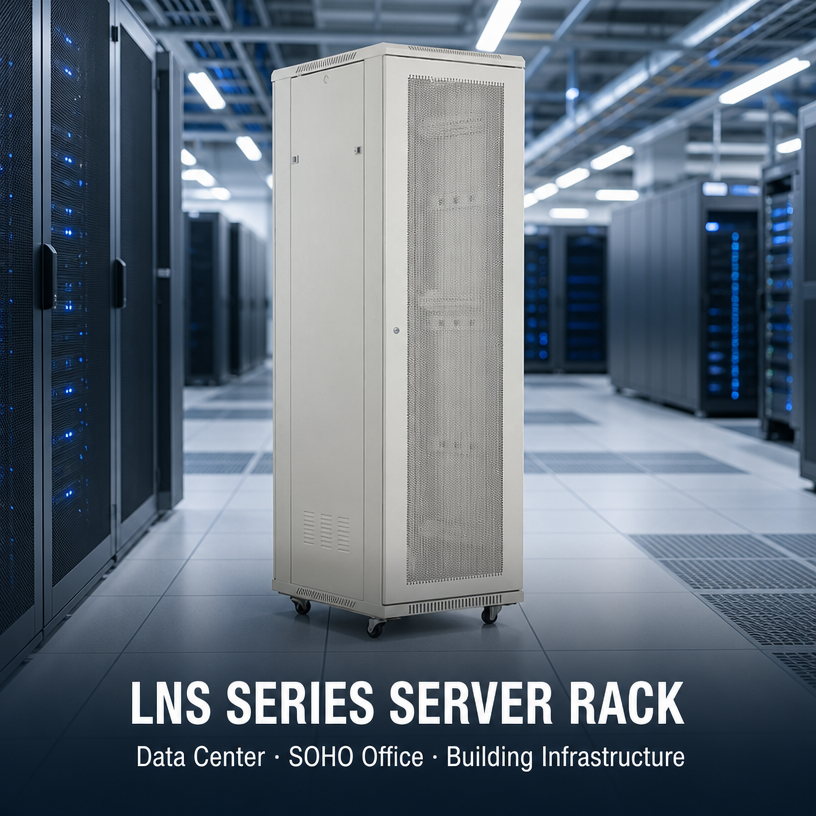
In this comprehensive guide, we explore every critical dimension of the 42U cabinet selection process, drawing on the real-world engineering capabilities of the LNS Series Server Rack — one of the most popular and trusted 42U cabinet solutions available in the professional market today.
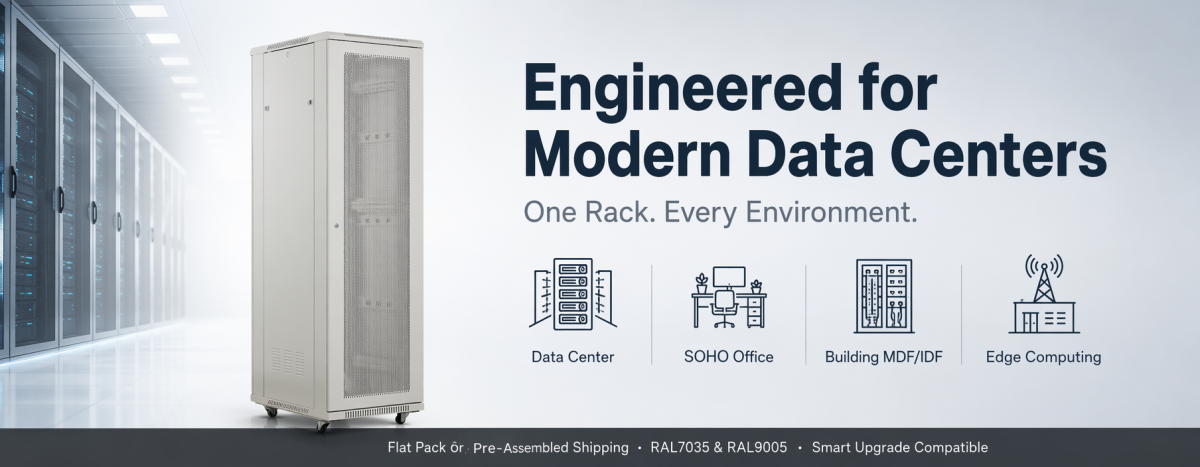 1. Why the 42U Cabinet Remains the Industry Standard
The 42U cabinet has dominated data center deployments for decades, and for good reason. The ’42U’ designation refers to the total number of rack units (U) available inside the enclosure, with each rack unit measuring 1.75 inches (44.45 mm) in height. A full 42U cabinet therefore provides approximately 73.5 inches of usable vertical mounting space — enough to house dozens of 1U or 2U servers, networking switches, firewall appliances, UPS units, and cable management components in a single, organized enclosure.
For IT planners, the 42U cabinet strikes the ideal balance between density and accessibility. Compared to smaller 18U or 24U enclosures, a 42U cabinet dramatically reduces the floor space required per unit of computing power, which is especially critical in colocation facilities where rack space is billed by the unit. Compared to taller 47U or 52U cabinets, the 42U format keeps the top-mounted equipment within comfortable reach for rack administrators, reducing the need for elevated work platforms.
The 42U cabinet is also the universal standard recognized by major equipment vendors. Server manufacturers, network hardware suppliers, and power distribution unit (PDU) producers design their products to fit standard 19-inch mounting rails at 42U depths — which means choosing a 42U cabinet gives you maximum hardware compatibility from day one.
In large-scale enterprise deployments, organizations routinely populate entire rows of 42U cabinets in hot-aisle/cold-aisle configurations, maximizing cooling efficiency while keeping cable runs short and manageable. In smaller SOHO offices and edge computing environments, a single well-configured 42U cabinet can consolidate an entire organization’s IT infrastructure, from the internet gateway to the storage array, within one lockable, organized enclosure.
2. Structural Integrity and Load Capacity: The Foundation of Every 42U Cabinet
When evaluating any 42U cabinet, the very first question to ask is: how much weight can it safely support? This is not merely a specification checkbox — it is a mission-critical parameter that determines which equipment you can deploy and how much you can grow your rack over time.
Modern data centers increasingly deploy high-density computing equipment: dense blade server chassis can weigh 200 lbs or more; enterprise storage arrays packed with high-capacity drives can exceed 300 lbs; and when you add UPS batteries, PDUs, cable trays, and patch panels, a fully loaded 42U cabinet can easily push past 500 lbs. A 42U cabinet with inadequate load ratings is not just a performance limitation — it is a safety hazard.
The LNS Series 42U cabinet is engineered with a maximum loading capacity of 1,000 kg (approximately 2,200 lbs), making it one of the most structurally capable enclosures available at its price point. This exceptional load rating is achieved through a combination of high-quality branded steel raw materials and advanced production techniques that deliver superior frame rigidity throughout the entire structure.
Unlike lower-cost alternatives that use thin-gauge steel or rely solely on spot-welded connections, the LNS Series 42U cabinet features a robust framework that distributes weight evenly from top to bottom, maintaining structural integrity even when equipment is unevenly distributed across the rack. This engineering discipline is what separates professional-grade 42U cabinets from commodity enclosures.
Practical implications of high load capacity in a 42U cabinet include:
- Freedom to deploy high-density server nodes without weight restrictions
- Ability to install full-size enterprise UPS systems directly in the rack
- Flexibility to add equipment over time without redesigning the rack layout
- Long-term peace of mind in environments where rack contents evolve frequently
3. Flexible Dimensions: Getting the Right Size for Your 42U Cabinet Deployment
One of the most common mistakes organizations make when purchasing a 42U cabinet is treating it as a single, fixed-size product. In reality, 42U cabinets are available in a range of widths and depths, and selecting the wrong dimensions can create costly problems — from equipment that doesn’t fit to airflow configurations that impede cooling performance.
The LNS Series 42U cabinet addresses this challenge with a comprehensive range of dimensional options designed to meet the specific requirements of diverse installation environments:
| Specification | Details |
| Height | 18U to 60U (42U is the most popular configuration) |
| Width | 600 mm / 800 mm / 1000 mm / 1100 mm / 1200 mm |
| Depth | 600 mm / 800 mm |
| Rail System | 19-inch profile rails, front and rear mounted |
| Rail Adjustability | Depth-adjustable with unit (U) markings |
Width selection in a 42U cabinet is driven primarily by the equipment you plan to install. The standard 600 mm wide 42U cabinet is the most common choice for server-centric deployments where all equipment conforms to the 19-inch EIA standard. The 800 mm wide variant is preferred when vertical cable managers need to run alongside the equipment — notably, the LNS Series 800 mm wide 42U cabinet includes two vertical cable managers as standard, providing immediate cable organization capability without additional accessories.
Depth selection in a 42U cabinet depends on the length of the servers and equipment you intend to mount. Modern 1U rack servers commonly range from 600 mm to 800 mm in depth, and the LNS Series accommodates both with its 600 mm and 800 mm depth options. The adjustable-depth 19-inch profile rails with unit (U) markings make it easy to position equipment precisely and maintain clear documentation of rack occupancy.
For organizations operating in constrained floor spaces — such as server closets, wiring rooms, or edge computing locations — the ability to choose a narrower or shallower 42U cabinet configuration means you never have to compromise on rack unit capacity to fit your physical space constraints.
4. Door Options and Access Security: 12 Configuration Types for Every Application
The door system of a 42U cabinet plays a dual role: it provides physical security for the valuable equipment housed inside, and it determines the airflow and visibility characteristics of the enclosure. The LNS Series 42U cabinet addresses both requirements with an industry-leading selection of 12 different front and rear door types, giving customers the flexibility to optimize for their specific operational environment.
Door types for the LNS Series 42U cabinet span the full spectrum of common requirements:
- Perforated steel doors — the most popular choice for thermally dense environments, offering high airflow rates while maintaining physical security
- Solid steel doors — ideal when maximum security and dust exclusion are the primary requirements
- Glass panel doors — commonly selected in executive briefing centers, network operations centers, and colocation facilities where visual monitoring of equipment status LEDs is important
- Mesh doors — providing excellent airflow with good visibility for environments that prioritize thermal performance
For both the front and rear doors, the LNS Series 42U cabinet supports a 120-degree opening angle — a specification detail that has real-world impact on rack accessibility. A 120-degree door swing allows technicians to fully access equipment even when racks are positioned in tight rows, without the door colliding with adjacent cabinets or wall structures. This is particularly valuable in colocation environments and dense server room layouts where aisle widths are minimized to maximize cabinet density.
Another thoughtful engineering feature of the LNS Series 42U cabinet is the reversible door hinge design: the door stop is easy to change from left to right, allowing the same 42U cabinet to be configured for left-hand or right-hand swing depending on the aisle layout and access requirements of a specific rack position. This eliminates the need to stock separate left-hinged and right-hinged cabinet models.
On the side panels, the LNS Series 42U cabinet features plastic quick-release lockable panels with an optional round metal lock upgrade. The quick-release mechanism allows authorized personnel to remove side panels rapidly for cable installation or maintenance work, while the locking capability ensures that panels cannot be removed by unauthorized individuals — a critical consideration in shared or colocation environments.
5. Cable Management: The Defining Factor in Long-Term 42U Cabinet Performance
Ask any experienced data center technician what separates a well-run rack from a problematic one, and the answer is almost universally the same: cable management. In a fully populated 42U cabinet, hundreds of individual cables — power cords, fiber patch cables, copper ethernet runs, KVM cables, and console connections — must be organized, labeled, and routed in a way that allows efficient administration without creating physical obstructions or airflow impediments.
The LNS Series 42U cabinet is designed from the ground up with cable management as a core engineering priority, incorporating multiple features that professional rack administrators consider essential:
5.1 Integrated Vertical Cable Management
The 800 mm wide LNS Series 42U cabinet includes two vertical cable managers as standard equipment. Vertical cable managers in a 42U cabinet run the full interior height of the enclosure alongside the mounted equipment, providing dedicated channels for power and data cables to travel vertically without crossing in front of servers or blocking airflow paths. This default inclusion eliminates a common oversight in rack procurement — purchasing a 42U cabinet without accounting for the vertical cable management accessories that are essential for clean, maintainable installations.
5.2 Horizontal and Vertical Cable Tray Options
Beyond the included vertical managers, the LNS Series 42U cabinet supports optional horizontal or vertical cable management channels that can be added at any point in the rack’s lifecycle. Horizontal cable management panels are typically installed between patch panels and active equipment, creating organized routes for short horizontal cable runs. Vertical channels provide high-capacity pathways for long backbone cables that must traverse the full height of the 42U cabinet.
5.3 Top and Bottom Cable Entry Points
The LNS Series 42U cabinet features large cable entry openings with black cellular grommets at both the top and bottom of the enclosure. These entry points accommodate high-volume cable bundles entering or exiting the cabinet from overhead cable trays or underfloor pathways — the two most common cable distribution architectures in modern data centers. The cellular grommet design prevents dust ingress while still allowing flexible cable routing.
5.4 Brush Cable Entry Options
For installations requiring cable entry points at specific locations along the height of the 42U cabinet, optional brush cable entry panels can be added at any position in the enclosure. Brush entries use flexible nylon bristles to allow cables to pass through while maintaining a physical seal — important for environments where contamination control or pressure differential management between rack interior and the surrounding space is a requirement.
6. Mobility, Stability, and Installation: Moving and Positioning Your 42U Cabinet
A 42U cabinet is a large, heavy piece of infrastructure. Even before the first piece of equipment is installed, an empty LNS Series 42U cabinet represents significant mass and dimensional bulk. The design of the cabinet’s mobility and installation features therefore has a major impact on the practical experience of deploying and maintaining a rack — especially in environments where cabinets need to be repositioned during installation or maintenance activities.
The LNS Series 42U cabinet ships standard with heavy-duty castors (caster wheels) and leveling feet included in every unit — regardless of the specific configuration ordered. This is a specification detail that varies between manufacturers: some 42U cabinet vendors treat casters and leveling feet as optional accessories, creating unexpected additional costs. With the LNS Series, every 42U cabinet arrives ready to be rolled into position.
The heavy-duty castors allow the 42U cabinet to be moved smoothly across raised floor tiles, concrete data center floors, and standard commercial carpeting — even when partially loaded. This capability is particularly valuable during the initial rack build phase, when technicians frequently need to reposition the cabinet to access rear cable ports or adjust the rack’s orientation relative to power and network infrastructure.
Once the 42U cabinet is in its final position, the leveling feet are extended to raise the castors clear of the floor, creating a stable, non-rolling foundation. This is critical for seismic stability and for ensuring that the cabinet does not shift under the dynamic loads created by opening heavy doors or sliding out heavy chassis on rails.
Also included as standard in every LNS Series 42U cabinet are 25 sets of cage nuts — the threaded fasteners used to mount rack equipment to the 19-inch profile rails. Many rack administrators have experienced the frustration of receiving a 42U cabinet without an adequate supply of cage nuts, which can delay equipment installation by days. The LNS Series eliminates this common friction point.
7. Safety, Grounding, and Compliance: What IP20 Means for Your 42U Cabinet
Professional 42U cabinet deployments require more than mechanical strength — they require adherence to electrical safety standards that protect both equipment and personnel. The LNS Series 42U cabinet carries an IP20 safety rating, a classification that has specific implications for data center and server room deployments.
The IP (Ingress Protection) rating system, defined by the IEC 60529 standard, characterizes the degree of protection provided by an enclosure against the intrusion of solid objects and liquids. The IP20 rating means:
- Protection against solid objects larger than 12.5 mm (e.g., fingers) from contacting live internal components — meeting the fundamental requirement for safe operation in occupied server rooms
- No specific protection against liquid ingress — appropriate for indoor, climate-controlled data center environments where liquid exposure is not an anticipated hazard
For indoor server room and data center applications, IP20 is the appropriate and widely adopted standard for 42U cabinet enclosures. It ensures that equipment installed in the rack remains protected from accidental contact while maintaining the airflow characteristics necessary for effective thermal management.
The LNS Series 42U cabinet also includes a grounding wire as standard equipment. Proper cabinet grounding is essential for electrical safety and for ensuring that the cabinet’s steel structure does not accumulate static electrical charge that could potentially damage sensitive electronic components during installation or maintenance. Grounding continuity across the entire cabinet structure is also required by most national electrical codes and data center certification standards.
Additional safety documentation features include warning stickers and operational labels positioned on the front and rear bottom frames of the LNS Series 42U cabinet, providing immediate reference for installation, load limits, and safety precautions at the point of use.
8. Color Options and Aesthetic Integration: Choosing the Right Finish for Your 42U Cabinet
While aesthetics may seem like a secondary consideration when selecting a 42U cabinet, the visual presentation of rack infrastructure matters more than many IT managers initially recognize. In corporate offices, customer-facing network operation centers, and executive briefing rooms, the appearance of server cabinets contributes directly to the professional image of the IT organization.
The LNS Series 42U cabinet is available in two standard RAL color options:
- RAL 7035 Light Grey — the most widely specified color for 42U cabinets in corporate and enterprise environments. Light grey provides a neutral, professional appearance that blends well with most office and data center interiors. It also has the practical advantage of showing dust accumulation less visibly than darker finishes, potentially reducing the frequency of cosmetic cleaning.
- RAL 9005 Jet Black — increasingly popular for 42U cabinetinstallations in modern data centers and high-design corporate environments. Black enclosures convey technical sophistication and are the preferred choice for co-location facilities, network operation centers, and any environment where the rack infrastructure is intentionally made visible to clients or visitors.
Both color options are applied as powder-coat finishes over the steel structure of the LNS Series 42U cabinet, providing excellent durability and resistance to scratching, chipping, and corrosion in normal data center operating conditions.
9. Smart Cabinet Upgrade Path: Future-Proofing Your 42U Cabinet Investment
One of the most forward-looking capabilities of the LNS Series 42U cabinet is its full compatibility with intelligent rack management systems. As data centers increasingly adopt automated monitoring, remote access management, and AI-driven infrastructure optimization, the ability to evolve a standard 42U cabinet into a fully instrumented smart rack enclosure represents significant long-term value.
The LNS Series 42U cabinet supports integration with the following smart infrastructure components:
- Smart PDU (Power Distribution Unit) — providing per-outlet power monitoring, remote switching, and consumption data for every device installed in the 42U cabinet
- Smart lock systems — enabling role-based physical access control with audit trail logging for every cabinet door open/close event
- Front door LED screen — providing at-a-glance cabinet status, asset identification, and operational alerts directly on the 42U cabinetexterior
- Related smart management systems — including environmental monitoring sensors for temperature, humidity, and air pressure within the 42U cabinetenclosure
This smart upgrade path is particularly valuable for organizations deploying 42U cabinets in edge computing locations — remote offices, branch sites, or industrial facilities — where physical access for routine administration is limited or expensive. A smart LNS Series 42U cabinet can be monitored and managed remotely, reducing the need for on-site technical visits while maintaining full visibility into the health and security status of the enclosed equipment.
For data center operators planning multi-year capacity growth strategies, the LNS Series 42U cabinet offers a clear evolution path from a basic enclosure to a fully instrumented smart rack without requiring a forklift upgrade of the cabinet itself — a significant capital cost advantage.
10. Packaging and Logistics: Delivering Your 42U Cabinet Safely
For organizations purchasing 42U cabinets in quantity — whether for a new data center build-out, a large enterprise office deployment, or a colocation provider’s infrastructure expansion — the logistics of packaging and delivery is a practical consideration that directly impacts project timelines and total acquisition cost.
The LNS Series 42U cabinet is available in two packaging configurations to suit different logistical scenarios:
- Flat Pack (Knock-Down) — the 42U cabinetis disassembled and packed flat for maximum shipping efficiency. This packaging method significantly reduces the shipping volume and weight per unit, lowering freight costs for international shipments. It is the preferred option for large-quantity orders where shipping cost optimization is a priority.
- Assembly Pack (Build-Up with Pallet) — the 42U cabinetis shipped pre-assembled on a pallet, ready for immediate deployment upon arrival. This option eliminates on-site assembly labor and is preferred when rapid deployment timelines or limited on-site assembly resources make pre-assembled delivery more practical.
When placing a custom order for the LNS Series 42U cabinet, the ordering process requires confirmation of the following specifications to ensure the delivered product precisely matches the installation requirements:
- Front and rear door type (selected from 12 available options)
- Door lock type
- Side panel lock type (standard plastic quick-release or optional round metal lock)
- Cabinet color (RAL 7035 Light Grey or RAL 9005 Jet Black)
- Depth (600 mm or 800 mm)
- Width (600 mm / 800 mm / 1000 mm / 1100 mm / 1200 mm)
- Height / U capacity (18U through 60U, with 42U as the most common selection)
- Transportation packaging method (Flat Pack or Assembly Pack with pallet)
11. Applications: Where the LNS Series 42U Cabinet Performs Best
The LNS Series 42U cabinet has been designed and engineered for broad applicability across the full spectrum of professional IT infrastructure environments. Its combination of structural integrity, dimensional flexibility, cable management capability, and smart upgrade compatibility makes it equally well-suited to demanding enterprise data center applications and smaller-scale professional deployments.
11.1 Data Center Construction
In purpose-built data centers, the 42U cabinet is the fundamental building block of the compute and storage infrastructure. The LNS Series 42U cabinet‘s 1,000 kg load capacity, robust frame construction, and comprehensive cable management features make it an ideal choice for high-density server deployments where dozens of 42U cabinets are deployed in organized rows. The optional smart rack upgrade capabilities align well with the automation requirements of modern, efficiently operated data centers.
11.2 SOHO and Enterprise Office Environments
Small office and home office (SOHO) environments increasingly require professional IT infrastructure to support modern workflows. A single LNS Series 42U cabinet can consolidate network switching, routing, storage, and computing equipment within one organized, lockable enclosure — dramatically improving the manageability and security of SOHO IT infrastructure compared to ad-hoc equipment placement.
11.3 Building and Facilities Management Infrastructure
In commercial buildings, the telecommunications and building automation infrastructure often requires professional rack enclosures in telecommunications rooms (TRs) and main distribution frames (MDFs). The LNS Series 42U cabinet is well-suited to these environments, providing secure, organized housing for structured cabling patch panels, network switches, access control servers, and building management system controllers.
12. How to Select the Right 42U Cabinet Configuration for Your Needs
With the range of configuration options available in the LNS Series, selecting the optimal 42U cabinet specification for a specific deployment requires systematic evaluation of several key parameters. The following framework provides a structured approach to 42U cabinet selection:
Step 1 — Assess current and planned equipment inventory
- List all equipment to be installed in the 42U cabinet, including rack units consumed by each item
- Verify maximum equipment depths against the cabinet depth options (600 mm vs. 800 mm)
- Calculate total equipment weight to confirm compatibility with the 1,000 kg load rating
Step 2 — Evaluate cable management requirements
- Count the number of patch cables, power cords, and fiber runs expected in the 42U cabinet
- Determine whether horizontal cable management, vertical cable managers, or both are required
- Identify cable entry points (top, bottom, or side) based on the data center infrastructure layout
Step 3 — Select door type based on thermal and security requirements
- High-density thermal environments: select perforated or mesh doors
- Security-critical environments: select solid steel doors with advanced locking
- Monitoring-oriented environments: select glass panel doors
Step 4 — Plan for smart rack evolution
- Determine whether the 42U cabinetwill integrate with smart PDU, smart lock, or monitoring systems now or in the future
- Specify smart-ready accessories at the initial order stage to simplify future upgrades
Step 5 — Confirm packaging and delivery requirements
- For large international orders: select Flat Pack to minimize shipping cost
- For rapid on-site deployment: select Assembly Pack with pallet
13. The LNS Series 42U Cabinet vs. Commodity Alternatives: What Makes the Difference
The global market for 42U cabinets spans a vast range of quality levels and price points. At the lower end, commodity 42U cabinet products compete primarily on price, often achieving cost reductions through the use of thinner-gauge steel, simplified welding techniques, limited configuration options, and the omission of accessories (such as casters, leveling feet, and cage nuts) that must then be purchased separately.
The LNS Series 42U cabinet occupies a clearly differentiated position in the market. Its key advantages over commodity alternatives include:
- 1,000 kg load capacity — significantly exceeding the load ratings of most entry-level 42U cabinetproducts, which typically range from 500 to 700 kg
- High-frame rigidity from premium branded steel — delivering structural consistency across the full height of the 42U cabinetrather than the localized rigidity achieved by simple frame-plate reinforcement
- 12 door type options — providing a level of configuration flexibility unavailable with commodity 42U cabinetproducts, which typically offer only 2-3 door styles
- Standard inclusion of casters, leveling feet, and 25 cage nuts — eliminating hidden accessory costs that make low-price 42U cabinetproducts more expensive in practice than their advertised price suggests
- Smart rack upgrade compatibility — future-proofing the 42U cabinetinvestment in ways that commodity products, designed purely for passive equipment housing, cannot match
- Professional ordering and customization process — ensuring that every LNS Series 42U cabinetdelivered precisely matches the customer’s dimensional, door type, color, and packaging specifications
Conclusion: Investing in the Right 42U Cabinet from Day One
The 42U cabinet is not a commodity purchase — it is the foundational infrastructure component upon which your entire IT environment depends. Choosing the right 42U cabinet from the outset determines not just the initial reliability of your rack deployment, but the long-term scalability, maintainability, and operational efficiency of everything housed within it.
The LNS Series 42U cabinet represents a proven, comprehensive solution for organizations that demand professional performance from their rack infrastructure. With its 1,000 kg structural capacity, 12 door type options, flexible dimensional configurations, integrated cable management, IP20 safety compliance, smart rack upgrade path, and complete standard accessory inclusion, the LNS Series delivers professional-grade capability without the premium pricing of specialized high-end enclosures.
Whether you are planning a new data center build, expanding an existing server room, or consolidating a growing SOHO network environment into a professional rack solution, the LNS Series 42U cabinet provides the engineering quality, configuration flexibility, and future-readiness that modern IT infrastructure demands.
When you are ready to specify your next 42U cabinet deployment, take the time to define your requirements across all of the dimensions covered in this guide: load capacity, dimensions, door configuration, cable management, mobility, safety compliance, smart upgrade potential, and logistics. The LNS Series is designed to meet those requirements precisely — and to continue meeting them for years to come.